

In a historic resolution to one of the longest-running geopolitical tech battles of the decade, TikTok, ByteDance, and Oracle officially announced the finalization of their US joint venture on January 23, 2026. Approved by both the US and Chinese governments, the deal marks the end of the looming threat of a total ban on the platform in the United States and sets a new global precedent for how multinational tech companies must handle data sovereignty.
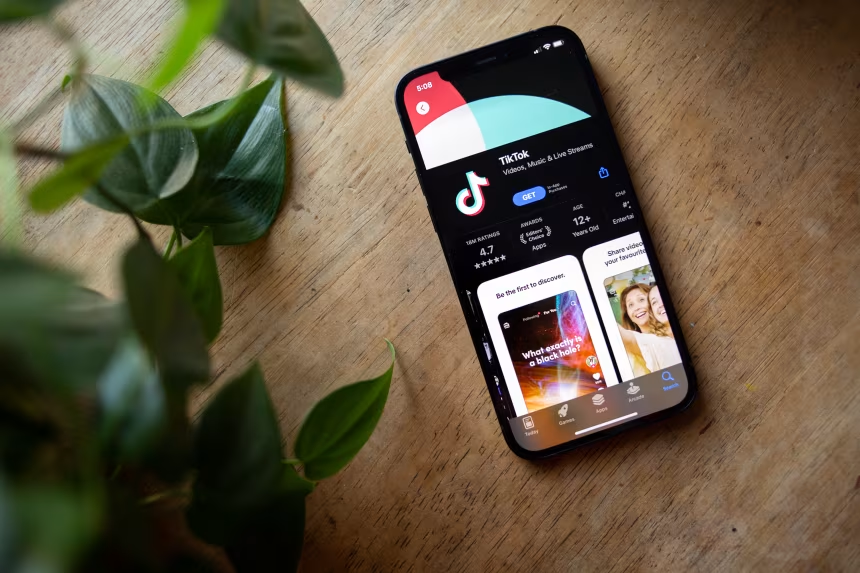
The newly formed entity, colloquially known as TikTok USA, will be headquartered in Austin, Texas. Under the terms of the agreement—negotiated with heavy oversight from the Trump administration’s “Board of Peace” economic team—Oracle now holds a minority stake in the new company and, more importantly, full operational control over the platform’s security infrastructure.
What Next
Crucially, ByteDance will retain its ownership of the underlying social media architecture, but the source code and the recommendation algorithm for US users have been “air-gapped.” This means the code now sits on Oracle-owned servers, where it is subjected to continuous, automated auditing by US-based engineers to ensure no foreign backdoors or influence-op protocols are present.
The centerpiece of the deal is the “Oracle Firewall,” a sophisticated hardware-and-software stack that physically isolates the data of TikTok’s 170 million American users.
-
Data Residency: No American user data is permitted to leave US soil.
-
Model Training: While the global algorithm continues to evolve, the specific model weights used to serve content to US users are now trained exclusively within Oracle’s domestic cloud environment.
The approval of this deal by the Chinese Ministry of Commerce (MOFCOM) is perhaps the most surprising element. For years, Beijing had signaled that it would rather see TikTok shut down in the US than surrender its prized algorithm. However, the shift toward a “joint venture” model rather than a forced sale allowed China to save face while ensuring its most successful global tech export survived.
For the US, the deal is being hailed as a win for “Economic Realism.” It preserves a platform that has become central to the American creator economy—supporting an estimated $24 billion in annual GDP—while addressing the national security concerns that had plagued the app since 2020.
-
Transparency Center: A new transparency facility in Austin will allow independent third-party researchers and government regulators to inspect the platform’s content moderation policies and algorithmic biases in real-time.

Related Posts

Starship’s Wall Street Debut: SpaceX $350B IPO
This move effectively turns SpaceX into the world’s most valuable…

The “Bionic Eye” Breakthrough
In December 2025, Science Corp (the neurotech firm led by former Neuralink…
NVIDIA Unveils Project GR00T
Last year I wrote about why booking too far in advance can be dangerous for…