Africa's Biggest Deal of the Year Runs on Two Wheels
While African venture capital retreated to fewer, safer bets in 2026, one company pulled in more money than anyone else on the continent — for battery-swapping motorcycles, not software. Spiro's roughly $270m round is a bet that infrastructure, not apps, is where African tech goes next.
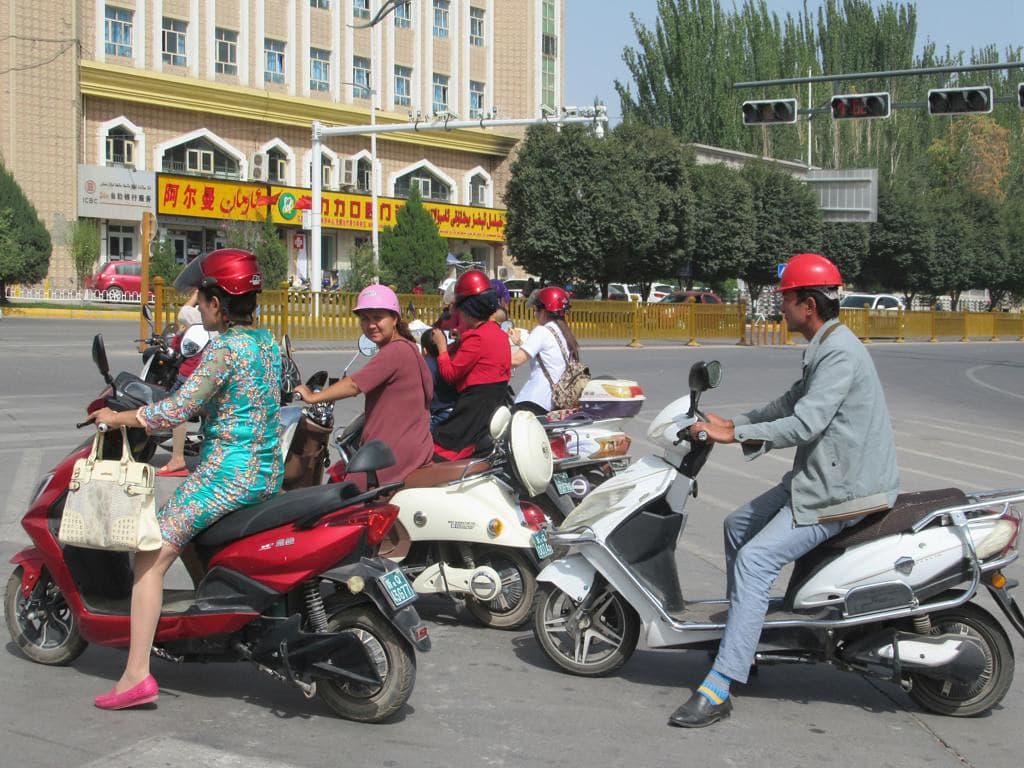
By the time the paperwork closed in June 2026, Spiro had already told its own story before anyone had to write it. The company does not sell software. It does not hold a fintech license or chase a subscription model. It builds electric motorcycles, swaps their batteries at roadside stations, and moves people through cities that public transit has never adequately served. In a year when African venture capital pulled back into fewer, more defensive bets, that plain proposition raised more money than anything else on the continent. On June 1, Spiro announced a $215m equity round. Three weeks later, on June 22, it disclosed a further $55m from NewTrails Capital, a China-based emerging-markets growth fund, taking the combined raise to roughly $270m — comfortably the largest single deal in African tech this year, and one of the largest the continent's electric-mobility sector has ever recorded.
The unglamorous business of getting somewhere
Spiro's pitch has always been closer to a utility than a startup. The company now operates in seven countries — Nigeria, Benin, Togo, Kenya, Uganda, Rwanda and Cameroon — where it has put roughly 100,000 electric motorcycles on the road, backed by more than 2,500 battery-swapping stations that have handled over 30 million swaps and enabled more than a billion kilometres of low-carbon travel. The model solves the two problems that have stalled electric vehicles across the continent: unreliable grid power and the absence of home charging. A driver who cannot count on electricity at night does not need a plug. He needs a station that will hand him a charged battery in under two minutes, the way a petrol pump hands him fuel. That single design choice — rent the battery, swap it rather than charge it — is what has let Spiro scale into markets where power itself cannot be taken for granted.
We are investing in Spiro and bringing Danish pension capital into one of Africa's most promising growth markets... we see potential for significant commercial growth in Spiro and electric mobility across Africa.— Lars Bo Bertram, CEO, Impact Fund Denmark
The June round was not Spiro's first capital event of the year, and the sequencing matters. In February, the company had already raised $50m in debt from Afreximbank, the impact lender Nithio, and the Africa Go Green Fund managed by Cygnum Capital — bringing its 2026 haul to something closer to $320m once the equity is added in. That blend, debt for the hard infrastructure of stations and batteries, equity for expansion and working capital, is becoming the signature financing shape of African infrastructure plays. Lenders can underwrite a battery-swap station the way they would underwrite a toll road: predictable, metered, revenue-per-swap. Equity investors, meanwhile, are betting on a market — motorcycle taxis, delivery riders, informal transport — that dwarfs anything a consumer fintech app could address on its own.
A single company propping up the numbers
The scale of the round says as much about the rest of the market as it does about Spiro. African startups raised roughly $1.44bn in the first half of 2026, according to tracking by Semafor Africa and TechCabal Insights — down 6 percent year on year, spread across just 146 deals compared with 252 a year earlier. Spiro's raise alone, at the top end of the range reported, could account for close to a fifth of that total. That concentration cuts two ways. It shows infrastructure-heavy, revenue-generating businesses can still command serious capital even in a cautious market. It also means the headline recovery numbers lean heavily on the fortunes of very few companies. Spiro's next test is whether the model travels: its stated expansion targets — the Democratic Republic of Congo, Ethiopia, Malawi, Mali — are markets with thinner grids, more volatile currencies and less institutional lending capacity than Lagos or Nairobi.
What Spiro represents, more than any single number, is a bet on where African tech goes after the app-first decade. The 2010s and early 2020s rewarded software that could be built cheaply and scaled through a smartphone. The businesses raising the biggest cheques in 2026 look different: batteries, cables, stations, fleets — capital-intensive, slow to build, hard to copy. That is a harder business to run than a fintech app, and a harder one for a founder to walk away from if the currency moves against them. But it is also, if it works, a business that competitors cannot simply clone with a better interface. Spiro's bet is that African transport's next chapter is written in steel and lithium, not code — and that the market is large enough, and captive enough, to reward whoever builds the physical rails first.
Sources & further reading
- African Startup Spiro Raises $215 Million, Nearing Unicorn Value — Bloomberg
- Kenyan EV startup Spiro raises $215m equity funding round to go pan-African — Disrupt Africa
- Kenyan EV startup Spiro raises extra $55m to take funding round to $270m — Disrupt Africa
- African startup funding dips 6% year on year — Semafor Africa
This is original Gr!dline analysis. Specific facts are attributed to the reporting above.
Related stories

Fewer, Bigger, Later: The Shape of Africa's 2026 Funding Recovery
By The Gridline
The Twenty-Two-Year-Olds Building Nigeria's Drones
By The Gridline

Lagos in May: The Founders Who Kept Building
By The Gridline