The Factory That Makes Thinking
On a grey March morning outside Johannesburg, Cassava switched on Africa's first NVIDIA AI Factory. The bigger question is whether a continent can finally stop renting its own intelligence.
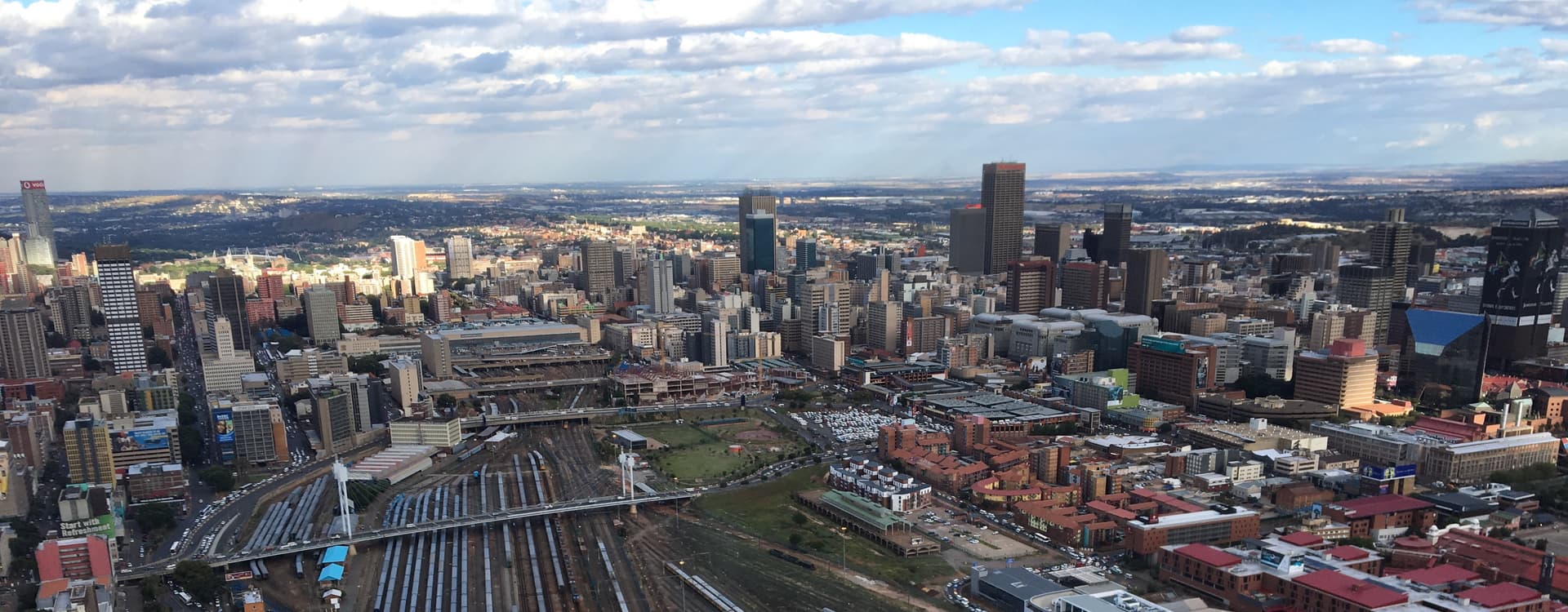
For most of the artificial-intelligence boom, Africa has been a tenant. The models that translate its languages, score its loans and read its scans were trained somewhere else, on machines in someone else's building, billed in a currency it does not print. The continent supplied the data and the demand and imported the thinking back at a markup. On 19 March 2026, in a server hall on the edge of Johannesburg, a company decided to stop paying rent.
That was the day Cassava Technologies, the infrastructure group founded by the Zimbabwean billionaire Strive Masiyiwa, powered on what it calls Africa's first NVIDIA-powered AI Factory. The phrase is deliberately industrial. A factory takes raw inputs and turns them into something usable, and the inputs here are data and electricity, the output is computation. Cassava is selling that output the way a power utility sells current: GPU-as-a-Service, metered, on demand, to anyone on the continent who needs to train or run a model and would rather not ship the job to Virginia or Frankfurt.
Three thousand machines, and a longer plan
The South African site went live with roughly 3,000 graphics processing units, the specialised chips that do the heavy arithmetic of modern AI, according to TechMoran's reporting on the launch. That number matters less for what it is than for what it begins. It is the first deposit on a far larger commitment: a roughly $700 million programme with NVIDIA, announced back in July 2025, that targets some 15,000 GPUs across three to four years. The March go-live is the down payment made visible.
Cassava has named the next stops on the line. After South Africa come Nigeria, Kenya, Egypt and Morocco, a deliberate spread across the continent's anglophone, francophone and arabophone poles. The geography is a thesis in itself. Compute, in this telling, should not pool in a single coastal hub the way undersea cables once did. It should be distributed, so that a startup in Lagos or a research lab in Cairo can reach a nearby cluster rather than a distant one.
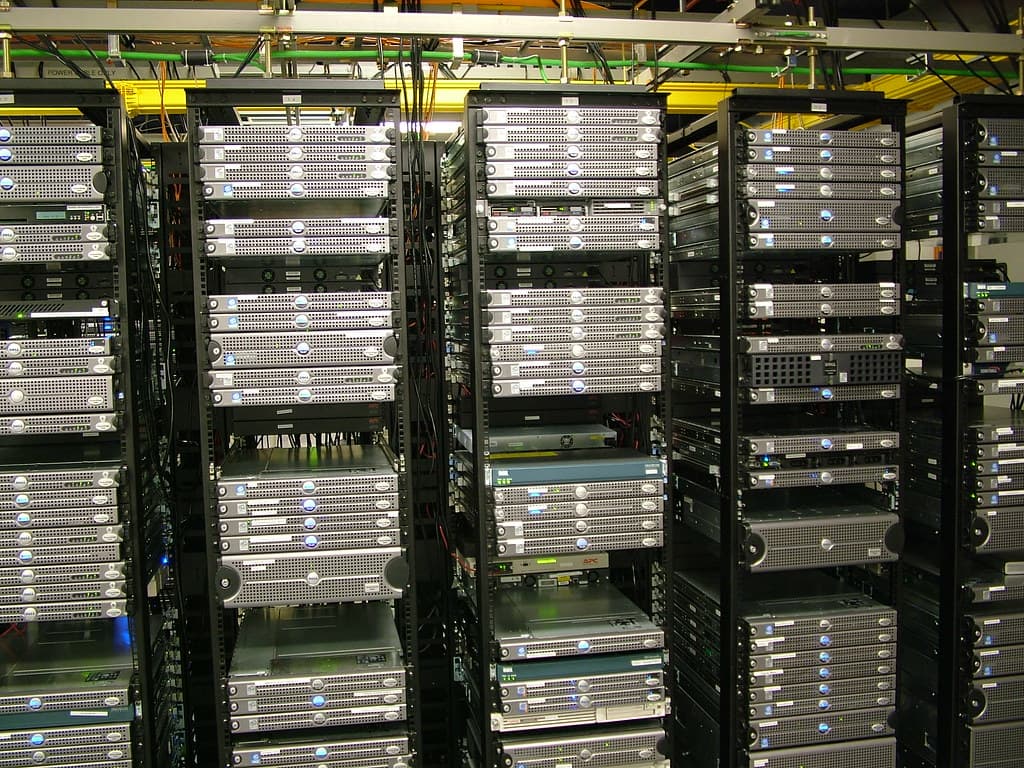
What Cassava is careful not to oversell is the chip itself. The company has not pinned the deployment to a specific NVIDIA model, and the wise reader should not either. The story is not the silicon. The story is the address: for the first time, the building is in Africa.
Why one percent is the only number that matters
To understand the stakes, hold one statistic in your head. Africa is home to roughly a fifth of humanity and holds less than one percent of the world's data-centre capacity. That asymmetry is the quiet scandal of the digital age. It means latency, dependency and a structural inability to keep sensitive data, health records, financial flows, citizens' identities, on home soil. You cannot build sovereign AI on borrowed infrastructure any more than you can build a sovereign navy on chartered ships.
The politics have finally caught up to the engineering. At the Africa Forward Summit in Nairobi on 12 May 2026, around thirty heads of state signed a declaration on digital infrastructure and AI, TechCabal reported, a level of coordination on compute that would have been unthinkable a few years ago. Presidents who once raced to attract garment factories are now racing to attract gigawatts and GPUs.
Our goal is to give Africa the infrastructure to write its own future, using its own languages – starting with Swahili.— Ahmed El Beheiry, COO/CTO, Cassava Technologies
El Beheiry's line is the most important sentence in the whole launch, because it reframes sovereignty as something more intimate than national pride. Models trained on African compute can be tuned on African languages, and a model that thinks in Swahili or Hausa is not a translated afterthought. It is a different machine, built for a different speaker. That is what a factory at home buys you that a server in another hemisphere never will.
The wall behind the wall
Then there is the problem no press release likes to name: power. A GPU is, among other things, a very efficient way of converting electricity into heat, and tens of thousands of them need stable, abundant, ideally clean supply. Africa's grids are not famous for any of those adjectives. The cautionary tale is already on the record. A $1 billion AI data centre planned for Kenya by Microsoft and the Emirati group G42, meant to run on geothermal energy, was put on hold over power constraints, a reminder that ambition and amperage do not always arrive together.
This is the real test for Cassava's expansion map. Lagos, Cairo and Casablanca each carry their own energy arithmetic, and a factory that cannot be reliably fed is just an expensive warehouse. The bet implicit in the whole programme is that compute demand will pull power investment along behind it, that the GPUs will become a reason to fix the grid rather than a casualty of it.
It would be easy to file this as another corporate milestone, a ribbon cut and a logo placed. But infrastructure has a way of outliving the announcements that herald it. The cables laid a decade ago decided who got cheap internet today. The compute switched on this March will decide, a decade from now, whose models speak the continent's languages and whose data never had to leave home. A factory that makes thinking is the most consequential thing you can put on a foundation. Cassava has poured the first one. The rest of the line is still being built.
Sources & further reading
- Cassava Technologies Deploys NVIDIA-Powered AI Factory in South Africa, Plans Kenya, Nigeria, Egypt Launch — TechMoran
- Why African presidents are now racing on AI infrastructure — TechCabal
- Will Nigeria get its first AI data centre in 2026? — TechCabal
This is original Gr!dline analysis. Specific facts are attributed to the reporting above.
Related stories
The Billion-Dollar Data Centre That Kenya's Grid Couldn't Promise
By The Gridline
Nigeria Wants a Sovereign AI. Its R&D Budget Tells a Different Story.
By The Gridline
The Patient Money Arrives
By The Gridline