The Thirty-Four-Million-Dollar Bet on African Defence
Two Nigerians in their early twenties have raised the largest seed round Africa has ever seen — to build drones, sentry towers and an operating system for spotting threats. Terra Industries is wagering that the continent's growth story collapses without one thing first: security.
There is a version of the African tech story that has been told so many times it has hardened into ritual. A young founder, a fintech app, a payments rail, a round announced in dollars, a TechCrunch headline. It is a real story, and a good one. But it is conspicuously a story about money moving — about the plumbing of commerce, the friction of sending value from one phone to another. The thing that has been missing, almost wilfully, is a story about whether any of that commerce is safe.
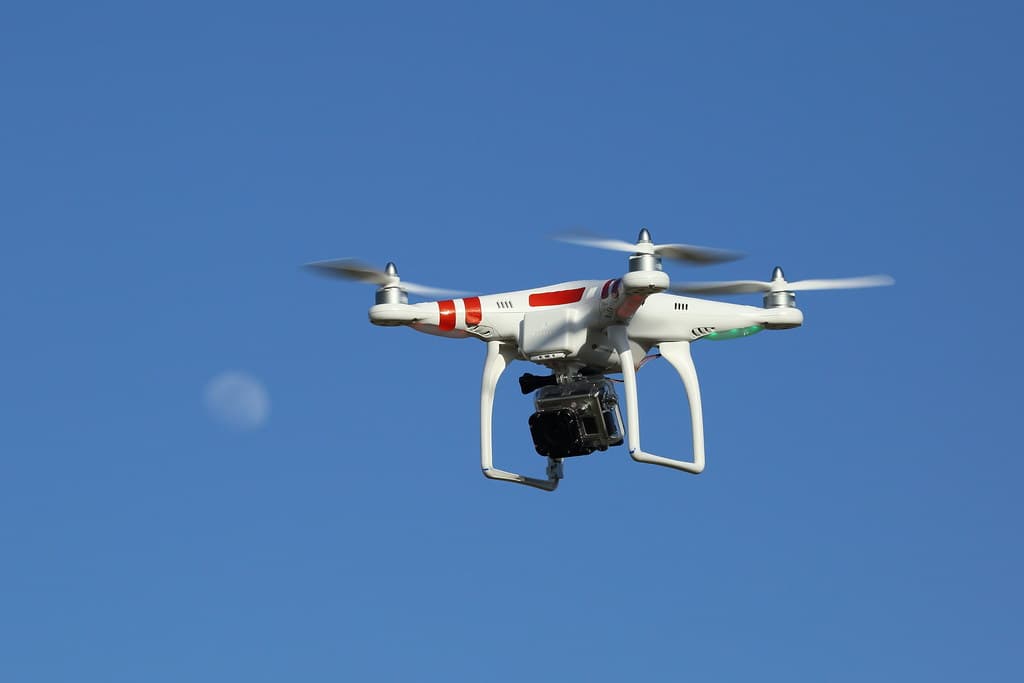
Terra Industries is that other story. Founded in Abuja in 2024 by Nathan Nwachuku, who is 22, and Maxwell Maduka, who is 24 and once engineered unmanned aerial vehicles for the Nigerian Navy, the startup does not build a wallet or a lending app. It builds drones, autonomous sentry towers and unmanned ground vehicles, stitched together by a threat-detection layer the company calls ArtemisOS. In a sector where most African founders pitch convenience, Terra pitches deterrence.
And investors, it turns out, were waiting for exactly this. In January 2026, the company closed an $11.75m seed round led by the American venture firm 8VC, according to Disrupt Africa. Barely a month later, in mid-February, it added a $22m extension led by Lux Capital, the deep-tech fund known for backing companies others find too strange or too hard, as reported by TechCrunch. Together the two tranches came to roughly $34m — a figure Disrupt Africa described as making Terra Africa's most-funded seed-stage startup. For a continent where seed rounds are usually measured in low single-digit millions, the number is not an increment. It is a category break.
The Achilles' heel argument
To understand why a defence-tech company would attract that kind of capital, it helps to hear how its founder frames the problem. "Africa is industrialising faster than any other region," Nwachuku told Disrupt Africa. "But none of that progress will matter if we don't solve the continent's greatest Achilles' heel — insecurity and terrorism."
It is a deliberately uncomfortable sentence. The optimistic narrative of African tech tends to treat insecurity as background noise — a regrettable externality that the right app, the right rail, the right marketplace will eventually route around. Nwachuku's wager is the opposite: that insecurity is not background but foreground, the binding constraint on everything else. A farmer who cannot reach his field, a trucking route that cannot move at night, a power line that cannot be maintained in a contested zone — each is a productivity loss that no amount of fintech elegance can offset.
That framing reorders the whole pitch. Terra is not selling weapons in the conventional sense; it is selling situational awareness, the ability to see a threat before it arrives. ArtemisOS, the company's software layer, is positioned as the brain that ties the hardware together — drones overhead, towers watching a perimeter, ground vehicles moving where it is too dangerous to send people. The hardware is the body; the operating system is the nervous system.
From pitch deck to balance sheet
What separates Terra from the long graveyard of ambitious hardware startups is that it appears to be selling something. The company has reported more than $2.5m in revenue, according to TechCrunch's account of the February round — a modest figure in absolute terms, but a meaningful one for a defence-hardware business barely two years old. Hardware is unforgiving. It does not scale on a marginal-cost-of-zero logic the way software does. Revenue, however small, is the signal that customers exist and that the product survives contact with the field.
The more consequential validation is institutional. On 23 February 2026, Terra signed a joint venture with Nigeria's Defence Industries Corporation, the state-owned military manufacturer known as DICON, to build local defence systems, as reported by Techpoint Africa. For a startup, a partnership with a national defence corporation is rocket fuel and risk in equal measure — it confers legitimacy and a buyer, while binding the company's fortunes to the priorities of a government. The company has also pursued manufacturing capacity abroad, working with AIC Steel in Saudi Arabia to expand production, per Disrupt Africa's reporting.
The questions the money cannot answer
There is a reason most African venture capital has steered clear of defence, and it is not squeamishness alone. Defence-tech sits at the intersection of the hardest problems a startup can choose: long sales cycles, government dependency, regulatory exposure, the moral weight of building systems designed to surveil and, ultimately, to harm. A drone that can watch a bandit camp can watch a protest. A sentry tower that secures a pipeline can secure a regime. These are not hypothetical tensions; they are the everyday terrain of the industry Terra has entered.
None of that is a verdict against the company. It is a reminder that the $34m is the beginning of a question, not its answer. Capital can buy engineers, factories and time. It cannot, on its own, resolve whether autonomous systems built in Abuja will be governed well, deployed accountably or sold responsibly. Those are choices that will be made over years, in rooms that no funding announcement reaches.
Still, something has shifted. For two decades the African tech narrative has been a story about access — getting more people online, banked, connected, paid. Terra represents a harder, less comfortable proposition: that access without security is a house built on sand. Whether two founders in their early twenties can carry the weight of that argument is unknown. That serious investors are now willing to bet $34m that they might is, in itself, the news.
Sources & further reading
- Nigerian defence-tech startup Terra Industries raises $11.75m funding — Disrupt Africa
- Nigerian defence-tech startup Terra Industries secures additional $22m funding — Disrupt Africa
- Terra Industries raises $22 million — TechCrunch
- Nigeria joins forces with Terra to build local defence systems — Techpoint Africa
This is original Gr!dline analysis. Specific facts are attributed to the reporting above.
Related stories

Fewer, Bigger, Later: The Shape of Africa's 2026 Funding Recovery
By The Gridline
The Twenty-Two-Year-Olds Building Nigeria's Drones
By The Gridline
Africa's Biggest Deal of the Year Runs on Two Wheels
By The Gridline